A few years ago, I came late to The Wire, but caught up quickly. Usually I’m not one to buy the hype for television series, but I had to admit that The Wire was every bit as powerful, funny, and eye-opening as its fans claimed. It’s a show that you tell friends “you need to watch this” rather than “you’ll really enjoy it,” because they really do need to watch it.
The Wire is necessary because it actually provides a glimpse into the reality of ground zero in the War on Drugs – a topic that any person (at least in the U.S.) should be well-educated on, but probably is not. And if The Wire is required watching, the book that preceded and inspired it should be required reading. It should be required reading, starting in jr. high if not sooner.
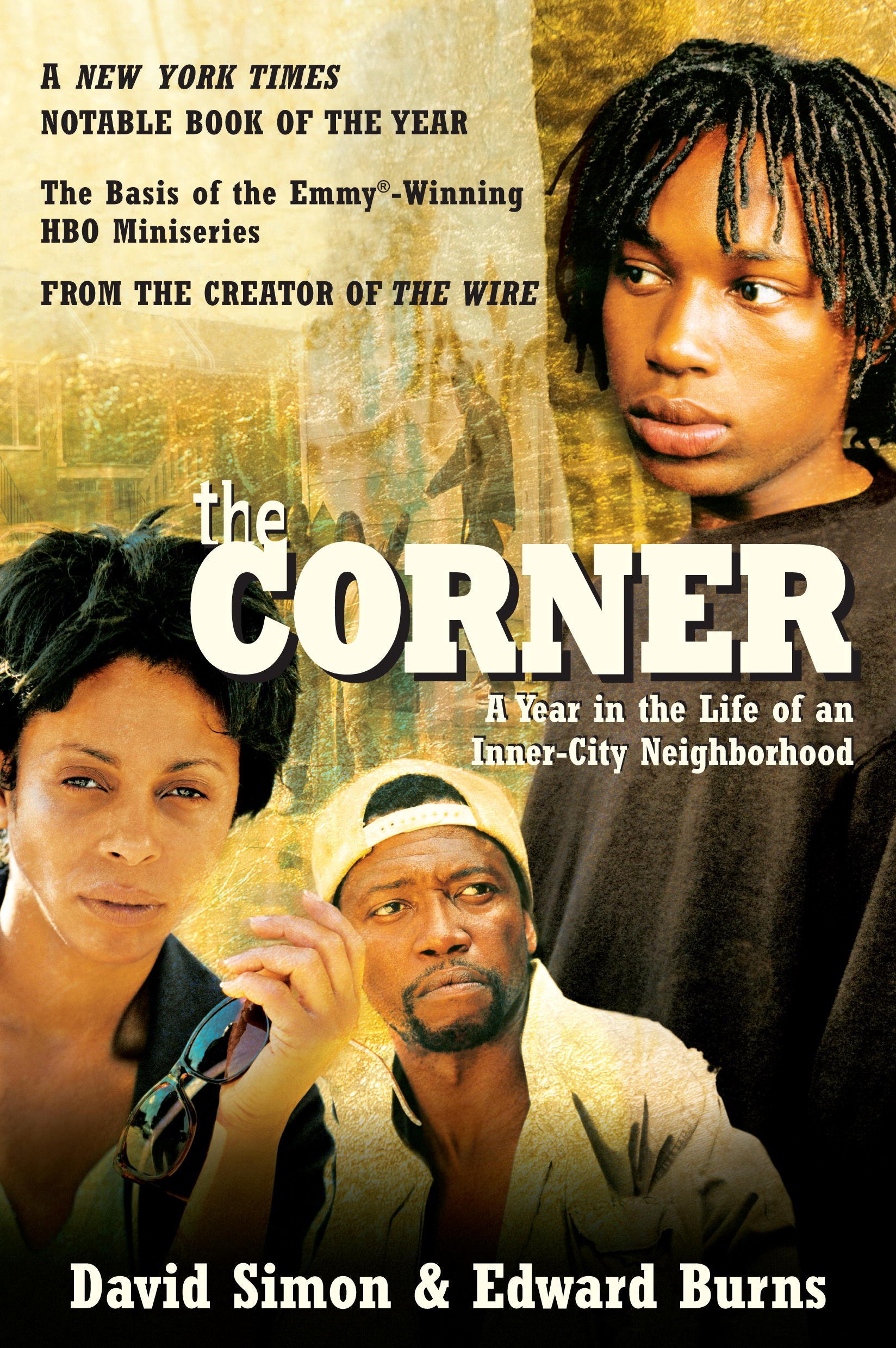
The Corner: A Year in the Life of an Inner-City Neighborhood, by David Simon and Edward Burns, is as gripping and compelling as any work of fiction I’ve ever read. But it has the virtue of being a true story, and true journalism. Simon and Burns spent months getting to know the subjects in the book, then a solid year following their lives on the corner. Interviews, observation, and follow-ups after the year was over.
The Corner gives a first-hand look at what life is like for those living in the middle of one of the worst neighborhoods in the United States. It provides a look at what growing up in poverty is really like, and why it’s not just as simple as “pulling yourself up by your bootstraps.” It might surprise people to learn that the corner that Simon and Burns chose is near the birthplace of H.L. Mencken, the sage of Baltimore. The world of Mencken and the world of teen drug slingers and desperate dope fiends are separated only by a few decades and less than a mile.
And The Corner tells the tale from the beginning. Simon and Burns cover the scope of Baltimore’s downfall, from the early 1900s when the McCullough family first settled into Baltimore, through four generations of McCulloughs. From stand-up citizen and family man, to his fallen son who essentially abandons his son to pursue his addiction, to a teen who plays at slinging drugs and fathers his own son while still too young to drive. This is how fast our cities decay.
You’ll find some hope, but not much, at the end of the book. The book is set in 1994, and published in 1997. More than a decade and a half later, we know how the story goes for many of the people in the book.
As a work of journalism, I’m simply in awe. We need so much more of this. I can’t say that I “loved” the book in the same way I enjoy a good book of fiction or entertaining non-fiction. After 500+ pages, I was ready to leave this world behind and only regretted that there isn’t more of Simon’s work out there to take on next. (Simon has only two books to his name, this and Homicide: A Year on the Killing Streets.) This book is a five out of five stars, perhaps six. It should certainly be required reading for anyone who aspires to have an opinion about the war on drugs or welfare policy in the United States.