“Details” by Frou Frou (No. 52)

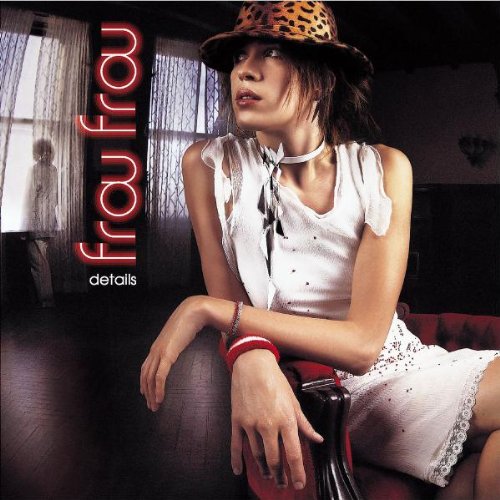
Details by Frou Frou album cover

Details by Frou Frou album coverWere it not for Zach Braff, I might have missed out on Frou Frou, The Shins, and missed Colin Hay’s solo career. So it’s a damn good thing my friend Rikki suggested we catch Garden State when I was visiting Lawrence, Kansas many years ago.
The first song on Frou Frou’s Details, “Let Go,” is featured in the movie and on the Garden State soundtrack. It was some of the first new music I’d been enthused about in a while. Turns out, the entire album is at least as good as “Let Go,” and a few of the tracks even better. Continue reading ““Details” by Frou Frou (No. 52)”

“Black Celebration” by Depeche Mode (No. 53)

Black Celebration by Depeche Mode album cover

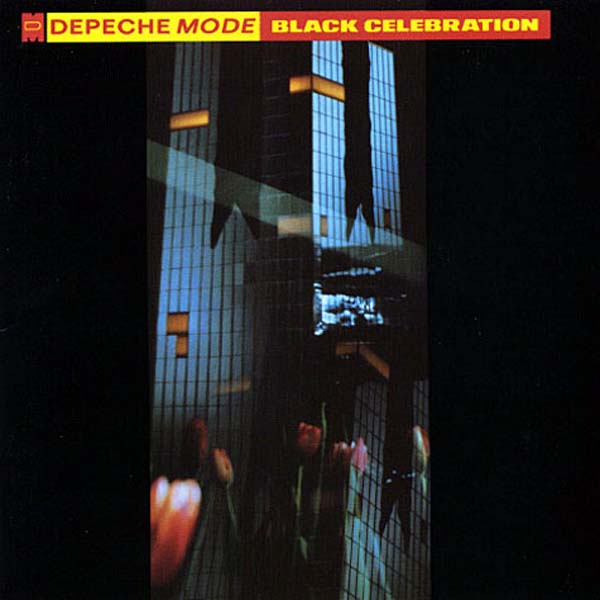
Black Celebration by Depeche Mode album coverNo instruments were harmed in the making of this album. Well, no instruments were used in the making of this album, anyway. I kid, of course, but I remember debating fiercely with friends in the 1986-1987 time-frame whether Depeche Mode made “real” music because the bulk (if not all) of the music was made with synthesizers, samplers, and drum machines.

I believe we’ve come down firmly on the side of yes, you can make music with electronic instruments, especially when you consider influential works like Black Celebration. Continue reading ““Black Celebration” by Depeche Mode (No. 53)”

“Bachelor No. 2 or, the Last Remains of the Dodo” by Aimee Mann (No. 54)

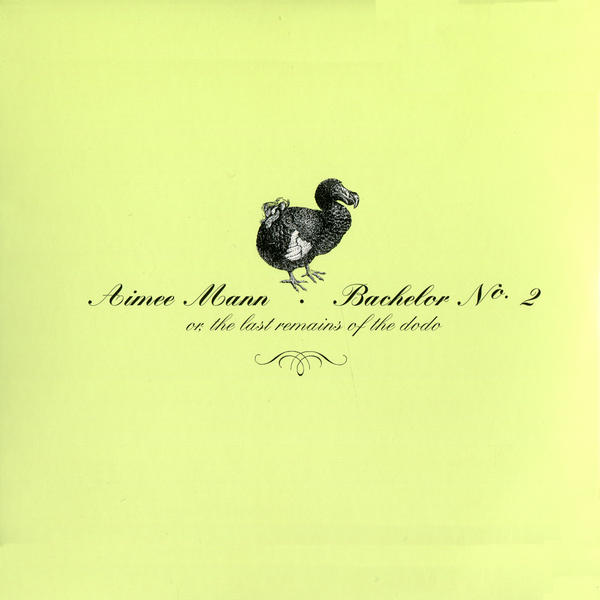
Bachelor No. 2 by Aimee Mann album cover

Bachelor No. 2 by Aimee Mann album coverBachelor No. 2 is the album that, if Interscope had its way, wouldn’t have been released at all. Instead, Aimee Mann bought the rights back and released it on her own through her website – a gutsy move in 2000, but it paid off for Mann and her fans.

Most of Mann’s albums make me unreasonably happy, but Bachelor No. 2 is wall-to-wall awesome. Let’s start with the opening track, “How am I Different?” It’s a perfect album opener, starting just with acoustic guitar, light drums, piano, and Mann’s voice. After a couple of verses, the music swells and carries you away. I love everything about this song, the melody, the bluesy guitar, Mann’s voice, and the lyrics. “Just one question before I pack, when you fuck it up later, do I get my money back?” Continue reading ““Bachelor No. 2 or, the Last Remains of the Dodo” by Aimee Mann (No. 54)”

“Duran Duran: The Singles 81-85” by Duran Duran (No. 55)

Duran Duran The Singles album cover

Duran Duran The Singles album coverThis next entry may be cheating, slightly. Does a box set count as an “album?” Let’s ask the judges if they’ll allow it. Oh, right. I’m the judge, so … yeah, I’m allowing it. My next pick is Duran Duran‘s collection, The Singles 81-85.

I’ll be honest, Duran Duran didn’t win me over initially with their consistently catchy songs. They didn’t win me over with John Taylor’s damned decent bass playing. It wasn’t the slick album art, nor Andy Taylor’s tasteful lead guitar playing. Nope, it was definitely the scantily clad women in the “Girls on Film” video. In my defense, I was 12 or 13, and scantily clad women were very relevant to my interests. Continue reading ““Duran Duran: The Singles 81-85” by Duran Duran (No. 55)”

“I’m Your Man” by Leonard Cohen (No. 56)

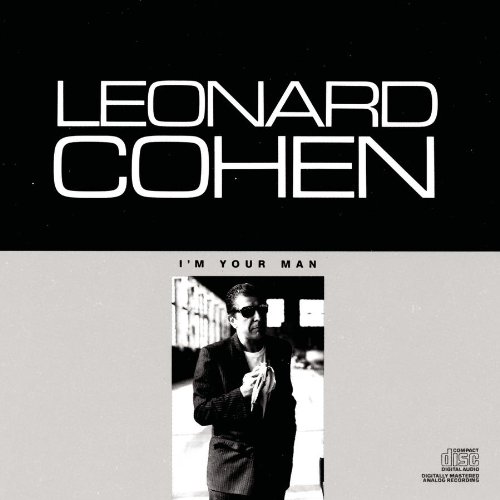
I'm Your Man album cover

I'm Your Man album coverThere are two kinds of people: Those who appreciate Leonard Cohen, and those who are wrong. I present as evidence Cohen’s eighth studio album, I’m Your Man.

Released in 1988 with heavy use of synthesizers and drum machines/electronic drums, I’m Your Man should sound dated. Indeed, if you focus on the backing tracks for the songs on this album, you’ll notice the distinctive sound of cutting-edge mid-80s technology. But it’s the songs, the lyrics, and the voices that propel I’m Your Man – and Cohen’s voice, the lyrics, and his backing chorus are timeless. Continue reading ““I’m Your Man” by Leonard Cohen (No. 56)”

“Apostrophe(‘)” by Frank Zappa (No. 58)

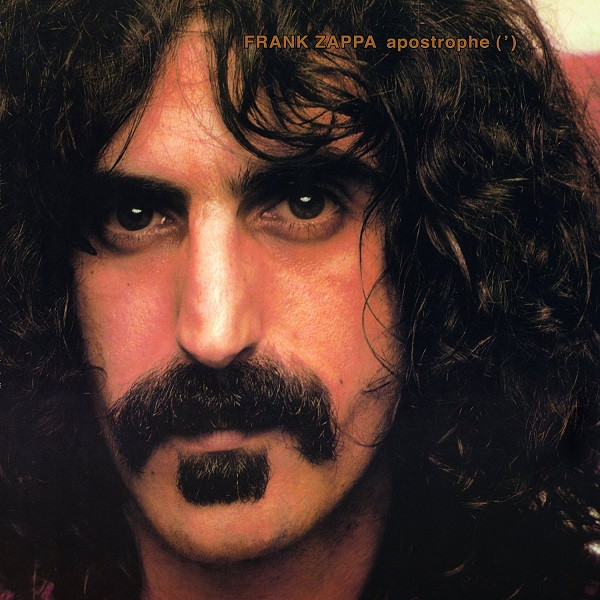
Frank Zappa album cover Apostrophe(')

Frank Zappa album cover Apostrophe(')Great googly moogly! Frank Zappa‘s Apostrophe(‘) fills me with unmitigated joy every time I listen to it. Apostrophe(‘), particularly the “Yellow Snow Suite” on the first half of the album, is equal parts silliness and brilliant composition and execution.

The first four songs on the album, “Don’t Eat the Yellow Snow” through “Father O’Blivion” are best consumed together, even though you’ll run into a badly edited single version of “Don’t Eat the Yellow Snow” here and there. Continue reading ““Apostrophe(‘)” by Frank Zappa (No. 58)”

“Black Snake Diamond Röle” by Robyn Hitchcock (No. 59)

Black Snake Diamond Role album cover

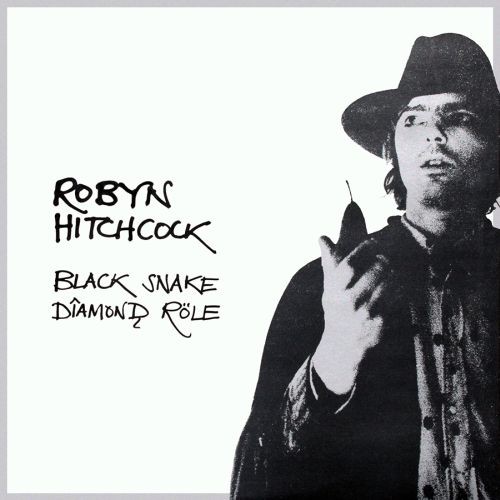
Robyn Hitchcock - Black Snake Diamond Role album coverThe first solo Robyn Hitchcock album, Black Snake Diamond Röle, literally opened a new world of music for me. A friend in high school declared that I’d like it, and handed me a cassette recorded from the LP. She was wrong, though. I didn’t like it, I loved it.

This was around 1986, and at the time I was mostly into classic rock – The Beatles in particular. I dabbled a bit in popular 80s music, but I hadn’t really gotten into alternative yet. Robyn Hitchcock was my gateway drug. Continue reading ““Black Snake Diamond Röle” by Robyn Hitchcock (No. 59)”

“Copper Blue” by Sugar (No. 60)

Album cover "Copper Blue" by Sugar

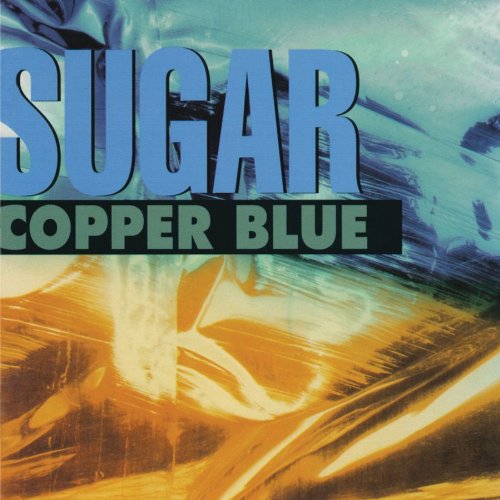
Album cover "Copper Blue" by SugarSugar‘s debut album, Copper Blue is a fusion of metal and melody, full of joyful noise and irresistible poppy compositions.

Sugar is Bob Mould‘s follow-up to Hüsker Dü, and you can hear the logical progression from tunes like “Makes No Sense At All” to Copper Blue. But Copper Blue is a little bit better produced and cleaner sounding, but still with plenty of rough edges left on for folks who don’t like it too clean.

“A Good Idea” leads off with a thunderous and simple bass figure, and adds layers of guitar, drums, and vocals in an ascent to sonic mayhem. The album goes straight from there to “Changes,” which starts off with a high-pitched guitar assault that’s like an ice pick to the eardrum… but in a good way.

“Changes” devolves briefly to a bit of guitar feedback that could be an outtake from My Bloody Valentine‘s Loveless. Then, with that little palate cleanser out of the way, Sugar launches back into the fray with “Helpless.”

[youtube https://youtu.be/rMvMS7PK8iA]

“Hoover Dam” adds keyboards (it almost sounds like a harpsichord) and has a baroque feel to it that sets it apart from the first four tracks on the album. It’s got a trippy intro, backwards guitar, and you’ll notice that Mould’s vocals are ever-so-slightly nudged towards the front on this one.

“The Slim” is a primal wail, about someone who’s lost a lover to AIDS. “The chances seemed so slim” he recriminates, angry and mourning simultaneously. It’s the most intense song on the album, and that’s saying something.

As if to let off a little pressure, “If I Can’t Change Your Mind” leads off with acoustic guitar and an almost peppy cadence. There’s honest-to-goodness harmonizing and everything here, and an almost Beatlesque guitar solo. The tempo is no less aggressive, but the rest of the song is as poppy as it gets.

[youtube https://youtu.be/Q8rmOX0H44M]

“Slick” is a more plodding, even thicker wall of sound with guitars so thick you’d need a jaws of life to pry yourself out of them. Again, though, Sugar doesn’t sacrifice melody to kicking ass.

Copper Blue has held up well indeed, to the extent that Mould played the album in its entirety on his 2012 tour to celebrate its 20th anniversary. (Sadly, I did not manage to catch this tour.) It pairs quite well with going to the gym, driving, writing, and any time one needs a strong push. If you managed to miss it the first time around, you’ll want to rectify that as quickly as possible.

“The Essential Johnny Cash 1955-1983” by Johnny Cash (No. 61)

Cover: The Essential Johnny Cash 1955-1983

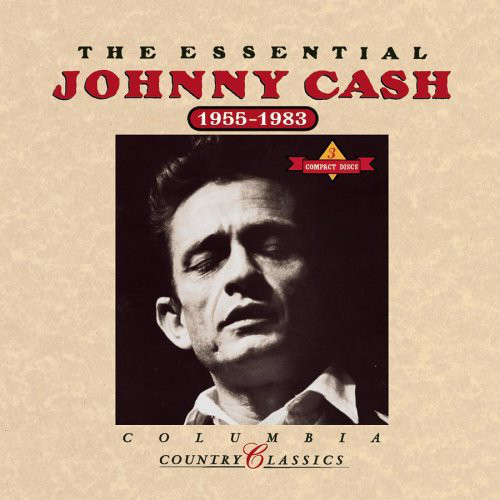
Cover: The Essential Johnny Cash 1955-1983There are few bands or musicians that command universal respect. Even The Beatles have their detractors. But when talking to other music-minded folks, I can’t recall a single soul who had a bad word to say about Johnny Cash. The Man in Black’s career spans nearly 50 years, and The Essential Johnny Cash 1955-1983 is a treasure trove of Cash’s early to middle years.

Cash is a hard artist to categorize. He’s often lumped in with country music, but also folk, rockabilly, and he’s done work that fits in the gospel category as well. According to his Wikipedia page, his later work fits in the alternative rock and even “Southern Gothic” categories.

Cash moves between genres effortlessly. On The Essential Johnny Cash you’ll find excellent examples of country standards, folk standards, gospel tunes, rockabilly, talking blues, and rock ‘n roll. The unifying factor is Cash’s legendary bass-baritone voice. There’s no mistaking Cash for anyone else, and he cannot be duplicated.

With 73 tracks on the three CD set, I won’t try to go track by track, but there are a few standouts I can’t resist touching on.

The Man in Black

There’s Cash’s “Man in Black,” a simple statement of why Cash opts to wear an all-black stage outfit rather than the more garish outfits usually associated with country acts. It’s unabashedly political, a protest song against Vietnam, mistreatment of drug users, and more.

It’s a simple, stripped-down song that depends Cash’s voice and acoustic guitar. And that’s it, really.

That’s the somber side of Cash, but his music has a much lighter side as well. There’s the classic “A Boy Named Sue,” which… well, if you’ve never listened to it, you need to pause a minute and give it your full attention for a little less than four minutes.

[youtube https://youtu.be/WOHPuY88Ry4]

There’s also “One Piece at a Time,” an upbeat piece about an autoworker stealing parts for a Cadillac over several years (decades?), eventually to assemble them into a Franken-car.

Paying for your crimes

Cash’s work is clearly aimed at the blue-collar, working poor. Plenty of songs in this collection are from the perspective of prisoners regretting their crimes, or about to pay for their crimes on the gallows. “25 Minutes to Go,” Written by Shel Silverstein, Cash counts down the minutes until the trap drops.

“Oney” is a revenge fantasy about a worker getting to punch out his boss on his last day at work. And, of course, you’ve got Cash’s cover of “The Legend of John Henry’s Hammer.”

Whether it’s talking blues, rockabilly, Cash’s version of country, or even gospel, there’s not a single song on this collection I’d leave off.

The organization of the collection is a bit haphazard, but that’s the only real complaint I can muster about this selection. For folks just wading into the work of Johnny Cash, as I was in the early 2000’s when I picked this up, it’s a fantastic primer on the first few decades of his work. Trying to get entirely up to speed on Cash is a bit daunting, given his fairly prodigious output and longevity. Start here, and then consider moving on to the American recordings.